Creationism Bragging Rights
 Did you know a "giant step" has been made in scientific efforts to create human life?
Yes, indeed! We are truly on the doorstep of designer life from scratch ... at least that's true if you're not paying careful attention to the bombastic claims of some scientists. Unlike the SF Chronicle, which bought the story hook, line and genome:
American scientists have built from scratch a synthetic chromosome containing all the genetic material needed to produce a primitive bacterium - a giant step toward the creation of artificial life. ...The article mentions curing disease and all the usual promises of mad scientists, then cuts to the chase:
Now, a team led by Dr. Hamilton Smith, director of the Venter Institute's Synthetic Biology Group, has manufactured from laboratory chemicals a ring of DNA containing all the genes of Mycoplasma genitalium - the tiniest bacteria ever found.
That means the team is tantalizingly close to creating an artificial form of life that could replicate itself using these machine-made genes.
And there is the matter of bragging rights of mythological proportions. Mere mortals have yet to lay claim to creating life.Yeah, and that's a good thing, if you ask me or nine out of ten science fiction writers. Why exactly would we want to produce artificial life? Is there something wrong with God-created life? Do we really think we can do any better?
Never mind with the metaphysical questions, though, because it turns out that Dr. Smith is hardly creating artificial life:
The plan is to slip the synthetic chromosome inside the microscopic skin of one of the Mycoplasma bacterium, replacing its natural genome with the machine-made one and sparking the creature into a life form that can reproduce itself.He may be hijacking actual life, but he's not creating anything sustainable from scratch if it takes having a Mycoplasa bacterium handy to pull of the trick.
It all reminds me of what is, perhaps, the greatest of all creationist jokes (not that there is exactly a primordial sea-full of creationist jokes, mind you).
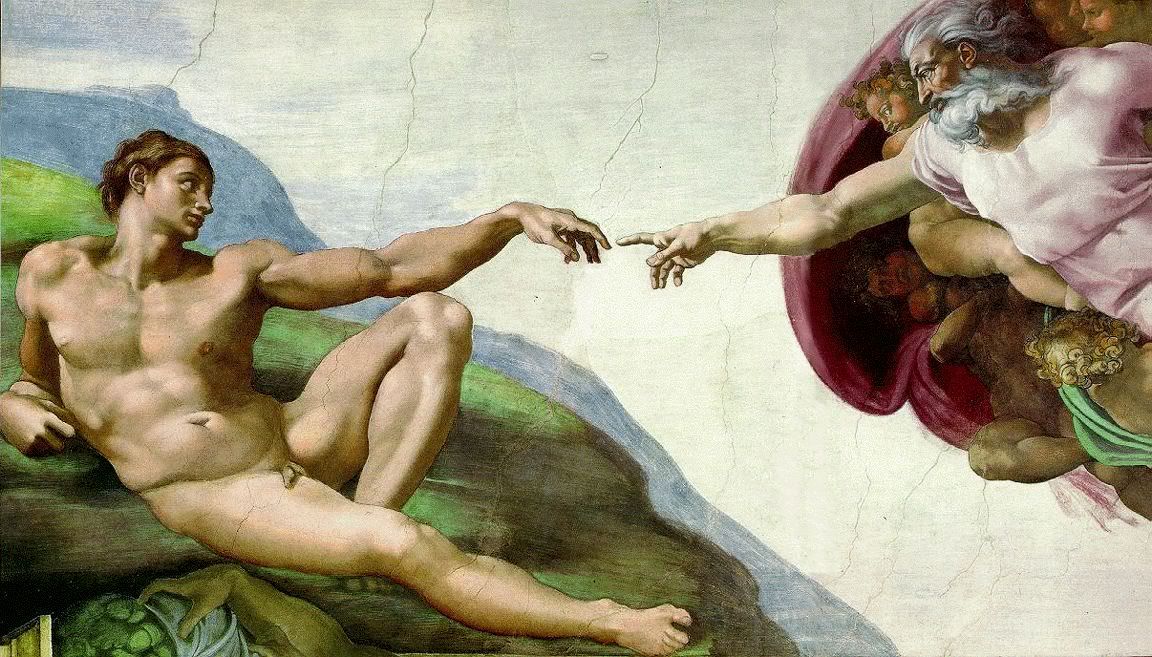
A scientist waves his arm at his massive lab of sophisticated equipment and says to God, "Human intelligence is now so great and our understanding of science so comprehensive that I, too, can create life."
Unimpressed, God reaches down, takes a lump of dirt, breathes on it, and transforms it into a butterfly that flutters from his hand.
"That's nothing!" brags the scientist. "I too can make a butterfly!" He reaches down to get a piece of dirt.
"Hold it right there," God says. "Make your own dirt."
Make your own host bacterium, Dr. Smith. The chromosome was a nice trick, but let's not lose our perspective, eh?
posted by Laer at 6:44 PM
|